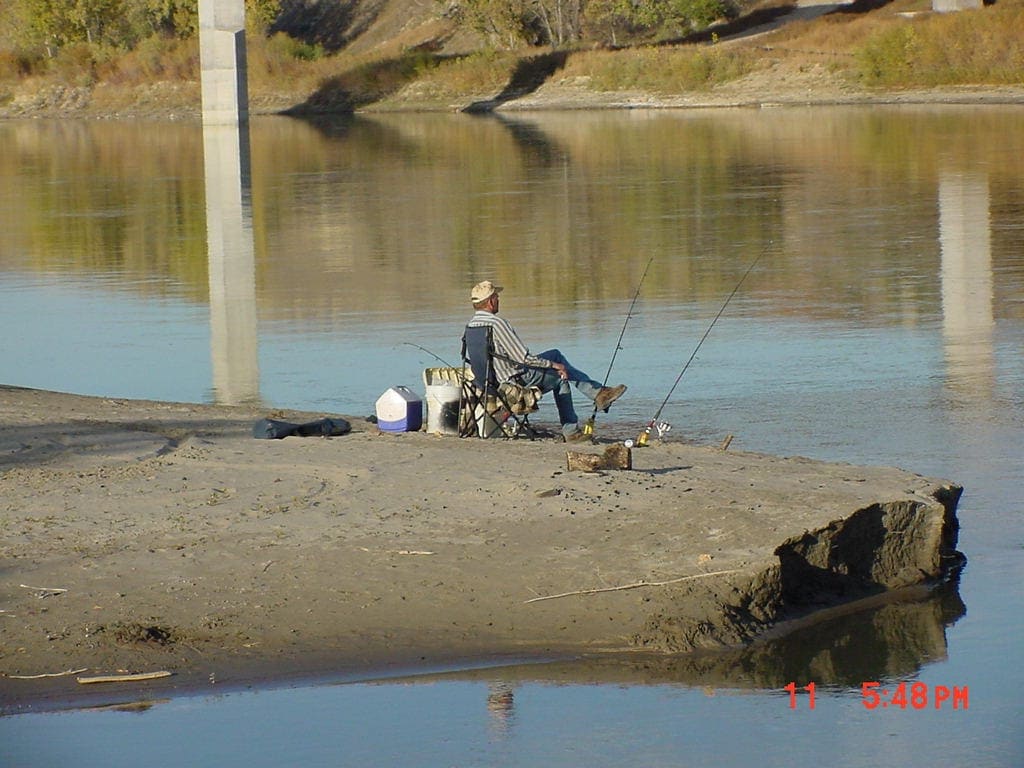
Moving water hides fish in plain sight. A river that looks like one uniform sheet of current is actually a mosaic of seams, slots, eddies, and cushions, and trout, smallmouth, and other river fish position themselves with ruthless logic. They want a spot that delivers food while costing them almost no energy. Learn to read where those two conditions overlap, and you stop fishing the whole river and start fishing the few square feet that matter.
This guide is about that skill: reading current, identifying holding water, and presenting a bait or fly so it behaves the way the fish expects. Master it once and it transfers to almost every river you will ever wade.
Why Fish Hold Where They Hold
Every river fish is solving the same equation all day: maximum food for minimum effort. Current pushes food downstream, but fighting full current burns calories. So fish look for places where slower water sits next to faster water, letting them rest in the slow lane while the fast lane delivers the conveyor belt of insects, baitfish, and dislodged morsels.
That single idea explains most of what you will see on the water. When you scan a run, you are really hunting for those slow-water-next-to-fast-water transitions. The classic holding lies are:
- Behind rocks and boulders, where a calm pocket forms downstream
- In front of rocks, on the upstream cushion where current piles up and slows
- Along current seams where two speeds of water meet
- In the tail-outs and heads of pools
- Under cut banks and overhanging cover
- In depressions and troughs on the bottom that break the current
Reading the Current: Seams, Eddies, and Cushions
Once you know what to look for, the river’s surface tells you most of the story.
Seams
A seam is the visible line where fast water meets slow water. You will often see it as a foam line, a change in surface texture, or a streak of bubbles. Fish stack along seams because they can sit in the soft side and dart into the fast side to grab food. The foam line is genuinely useful here, because foam follows the same path the current carries food. Fish the foam.
Eddies
An eddy is where current reverses and circles back upstream, usually below a point, a boulder, or a bank obstruction. The water inside an eddy can be moving the opposite direction from the main flow. Fish hold on the edge of the eddy, facing into whatever current is bringing food. Pay attention, because your drift inside an eddy may need to run upstream relative to the main river.
Cushions
The cushion is the soft pillow of water on the upstream face of a boulder. Many anglers fish only behind rocks and ignore this front-side lie entirely. A large fish will often take the cushion because the food arrives first there. Drift the front of the rock as deliberately as you drift the back.
Prime Holding Water You Can Find on Any River
Some structures hold fish so reliably they are worth approaching with a plan before your first cast.
- Boulder pockets. A rock breaking the surface almost always has a fish-holding pocket behind it and a cushion in front. Fish both, and fish the seams running off each side.
- Pool heads. Where fast riffle water dumps into a deeper pool, oxygen and food concentrate. Fish stage at the head to intercept the first wave of drift.
- Pool tail-outs. The shallow, slick water at the bottom of a pool is an underrated feeding zone, especially early and late in the day. Approach it carefully because fish here spook easily.
- Cut banks and undercuts. Deeper water against an eroded bank gives fish overhead cover and current relief. The biggest fish in a stretch often live here.
- Riffles. Broken surface water hides fish from predators, carries oxygen, and tumbles a steady food supply. Do not walk past a riffle just because it looks too shallow.
- Confluences. Where a tributary or side channel enters, you get a fresh seam, a temperature or clarity break, and concentrated food. These spots punch above their weight.
Presentation: Make It Drift Like It Should
Finding the lie is half the battle. The other half is getting your offering to the fish behaving naturally. The enemy is drag, which is when current pulls your line and makes your bait or fly move unnaturally fast or off-line. Fish in clear, pressured water reject a dragging presentation almost instantly.
A few principles cover most situations:
- Get the right depth. Most river fish feed near the bottom. Add or subtract weight until you occasionally tick bottom. If you never touch bottom, you are probably drifting over their heads.
- Manage your line, not just your cast. Mending line upstream or downstream removes the belly that current puts in your line and buys you a longer drag-free drift.
- Cast upstream of the target. Your offering needs time and distance to sink to the fish’s level before it reaches the lie.
- Fish closer than you think. Wading anglers routinely cast past nearby pockets to reach distant water. The fish at your feet, behind the nearest rock, may be the easiest catch of the day.
Approach and Positioning
How you move on the river determines how many fish you ever get a cast at. Vibration and shadow travel far in moving water.
- Fish upstream when you can. Most river fish face into the current, so approaching from behind keeps you out of their window of vision.
- Wade slowly and deliberately. A pushed wake or grinding gravel announces your arrival.
- Use the broken surface of riffles to hide your approach to deeper holding water above or below them.
- Keep a low profile against bright sky, and avoid casting your shadow over the lie.
Putting It Together on a Real Run
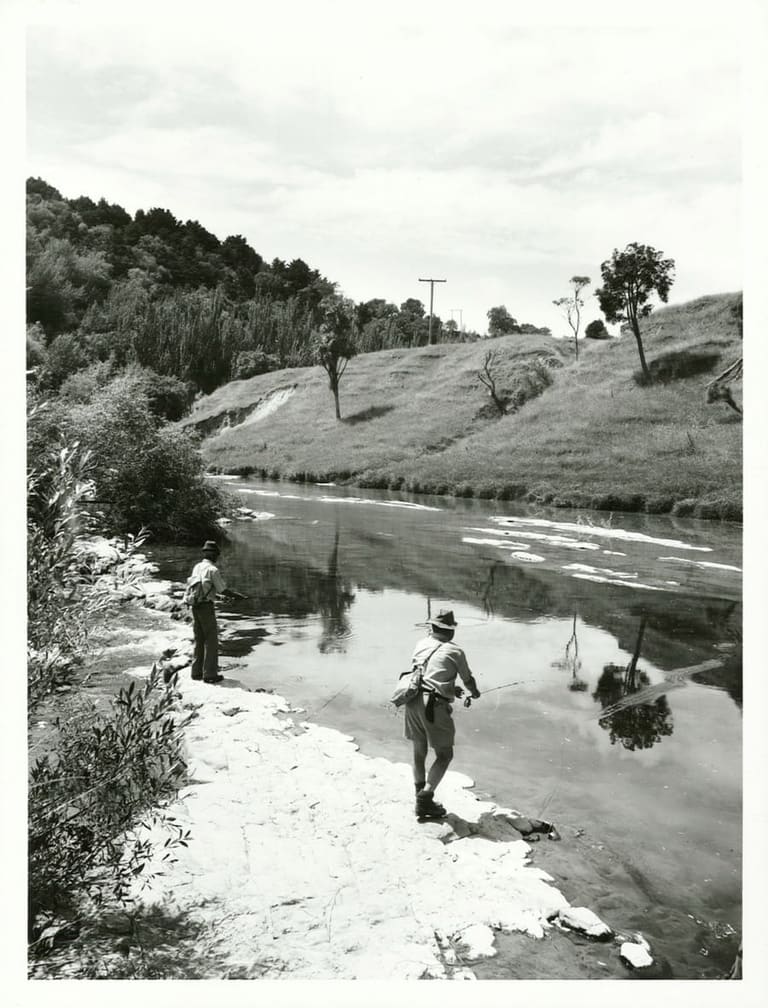
Walk up on a stretch and resist the urge to cast immediately. Spend a minute reading it. Find the main current tongue, then trace the foam line. Locate the obvious boulders and the seams peeling off them. Note the pool head, the tail-out, and any cut bank. Now you have a target list.
Start with the closest, most likely lie so you do not spook it by wading past. Cast upstream of it, get your offering down, mend to kill drag, and let it travel naturally through the strike zone. If you get no response after a few good drifts, change one variable at a time: add weight, lengthen the drift, or shift your angle. Then move to the next target on your list and repeat.
Final Thoughts
Reading current is a skill that compounds. The more time you spend connecting what you see on the surface to where fish actually hold, the faster you will recognize prime water on rivers you have never fished before. Slow down, study the seams and foam, present without drag, and approach with care. Do those four things consistently and you will catch more fish on moving water than any single fly or bait choice will ever buy you.
.jpg)