The Texas rig is the bass angler’s Swiss Army knife. It is weedless enough to drag through brush, grass, and laydowns where bass actually live, yet simple enough to tie in under a minute once you know the steps. If you have ever lost a soft plastic to a snag on every other cast, this is the rig that fixes it.
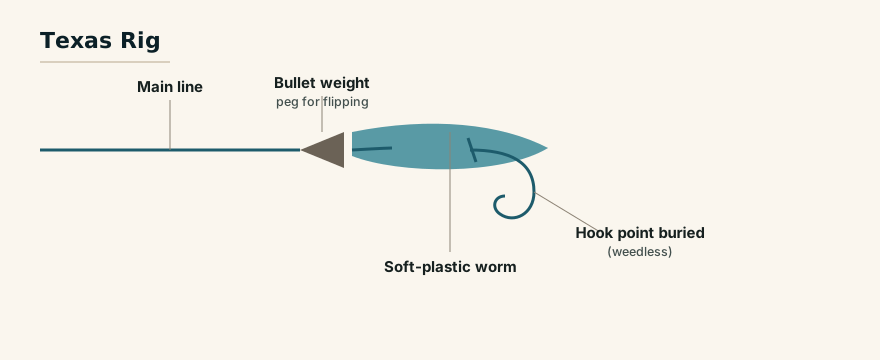
What makes the Texas rig special is the way the hook point tucks back into the body of the bait. That single detail turns a bare hook into a near-snagless presentation you can fish with confidence in the nastiest cover on the lake. Learn it well and it will catch fish for the rest of your life.
What You Need
Before you tie, gather the right components. The Texas rig is only three parts plus your line, but each one matters.
- Bullet weight: A cone-shaped sinker that slides on your line and slips through cover. Common sizes run from 1/8 oz for finesse work up to 1 oz or more for punching heavy mats.
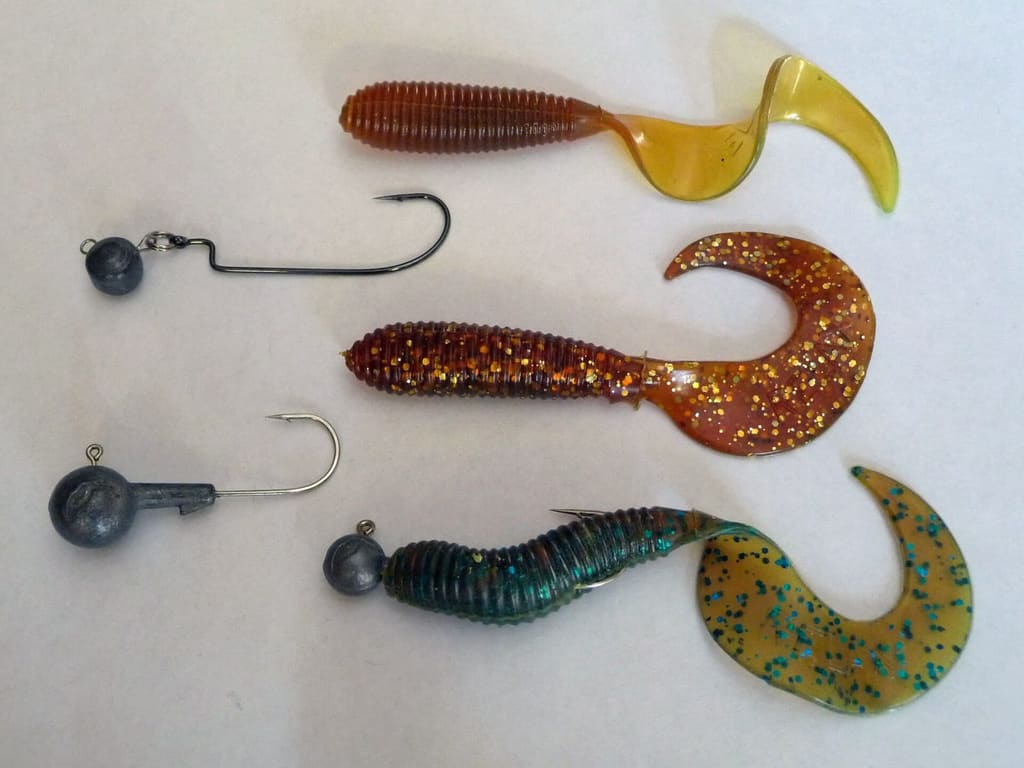
- Worm hook: An offset wide-gap (EWG) or straight-shank worm hook in a size matched to your bait. A 3/0 or 4/0 EWG covers most 4 to 7 inch plastics.
- Soft plastic bait: Worms, creature baits, craws, and lizards all rig Texas style.
- Line: Fluorocarbon (12 to 17 lb) is the standard for sensitivity and abrasion resistance. Braid (30 to 50 lb) is better around heavy grass and wood.
Step-by-Step: Tying the Texas Rig
Here is the core sequence. Take it slow the first few times and it will become muscle memory fast.
- Slide on the bullet weight. Thread your line through the wide end of the cone first, so the point of the weight faces up your line toward the rod. This lets it knife through cover.
- Tie on the hook. Attach your worm hook with a strong knot. A Palomar or improved clinch both work well. Snug it down and trim the tag.
- Insert the hook point into the nose. Push the point straight into the very center of the bait’s head, run it down about a quarter inch, then bring the point out the side or bottom.
- Slide the bait up to the hook eye. Pull the plastic up over the hook eye so it seats against the knot. The nose of the bait should sit flush at the eye.
- Rotate and measure. Turn the hook 180 degrees so the point faces back toward the body of the bait. Lay the hook alongside the plastic to see exactly where the point needs to re-enter so the bait hangs straight.
- Skin-hook the point. Push the hook point back into the bait at that measured spot, then back it out just slightly so the tip barely tents the plastic without poking through. This is the weedless setup.
Getting It Straight and Weedless
A crooked bait spins on the retrieve, twists your line, and looks unnatural to fish. The cure is the measuring step. Always lay the hook against the bait before the final insertion so you know precisely where the point should exit and re-enter.
For the weedless tuck, you want the point sitting just beneath the plastic’s skin, not buried so deep it cannot break free on a hook set. Press your thumb against the back of the bait. If you can feel the point ready to pop through with light pressure, you have it right. Too deep and you will miss fish; too exposed and you will collect weeds.
Choosing the Right Weight
Weight selection controls your fall rate and your ability to penetrate cover. Lighter is more natural; heavier gets you through the thick stuff.
- 1/8 to 1/4 oz: Open water, sparse cover, finesse presentations, and shallow fish.
- 3/8 to 1/2 oz: The all-around workhorse range for most bass fishing.
- 3/4 to 1 oz and up: Punching through matted grass, lily pads, and dense wood.
Tungsten weights cost more than lead but are smaller for the same weight, denser, and transmit bottom contact more clearly. Many serious anglers fish tungsten for this reason, and some waters restrict lead tackle anyway.
How to Fish It
The Texas rig shines on a slow, deliberate retrieve. Cast or pitch to cover, let the bait fall on a semi-slack line, and watch your line closely. Many strikes happen on the initial drop, so a line that twitches or jumps means set the hook.
On the bottom, work the bait with subtle lifts of the rod tip, dragging and hopping it through the strike zone rather than reeling steadily. Pause often near isolated cover such as stumps, dock posts, and grass edges. When you feel the tell-tale tap or sudden heaviness, reel up the slack and set hard with a sweeping motion to drive the point through the plastic and into the fish.
Common Mistakes to Avoid
- Crooked baits. Skipping the measuring step leads to spin and line twist. Always check the bait hangs straight.
- Burying the point too deep. This causes missed hook sets. Keep the point just under the skin.
- Setting the hook too softly. With a weedless rig you must drive the point through the plastic first, so commit to a firm sweep.
- Wrong weight for the cover. Too light and you never reach the fish in heavy grass; too heavy and you spook fish in clear, shallow water.
Final Thoughts
The Texas rig earns its reputation because it is simple, snag-resistant, and deadly effective across almost every bass fishery in the country. Tie a few in your kitchen before your next trip so the steps feel automatic on the water. Once the motion is second nature, you will rig it in seconds and spend your time where it counts, dragging a perfectly weedless bait right through the cover other anglers avoid.